

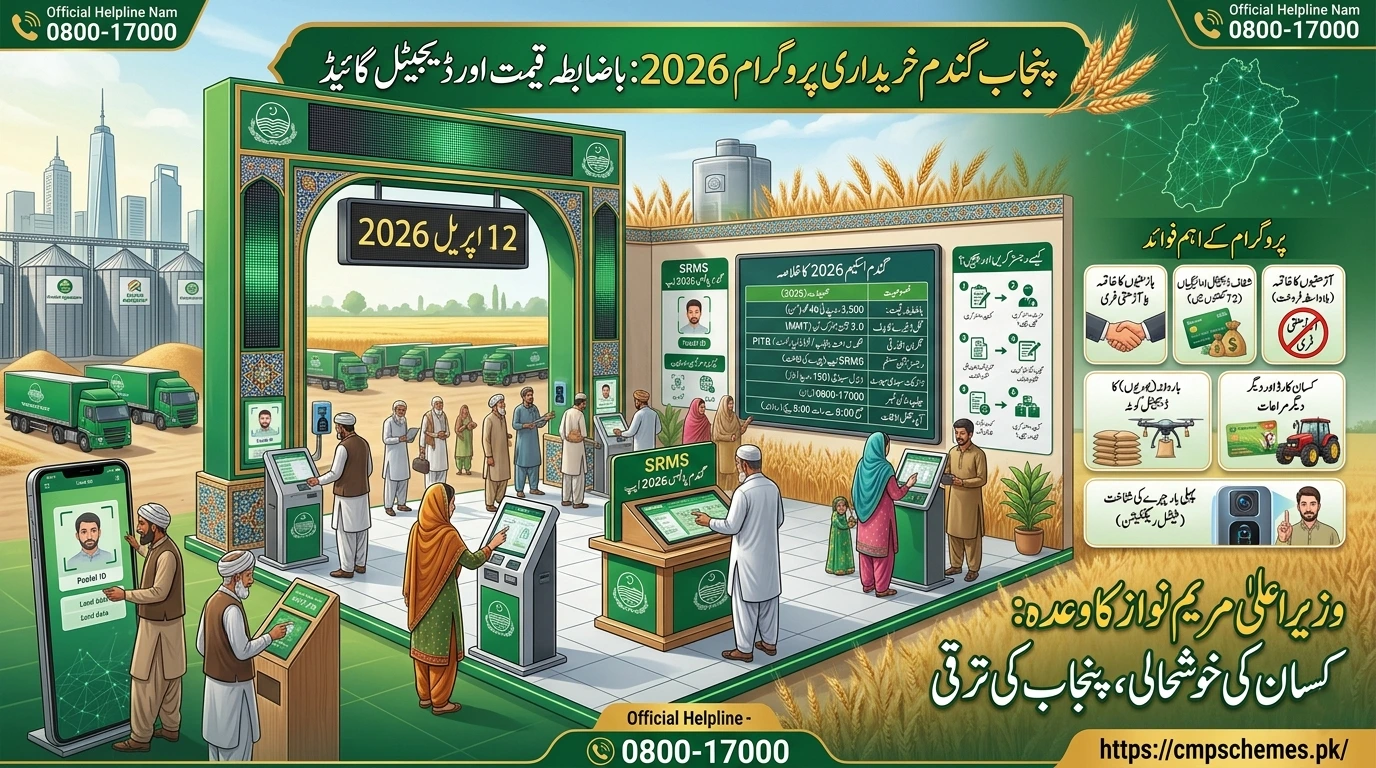
The Punjab Wheat Procurement Program 2026 has officially entered its operational phase, representing a landmark shift in Pakistan’s agricultural policy. Under the leadership of Chief Minister Maryam Nawaz, the provincial government has transitioned to a market-stabilization model that prioritizes transparency and the elimination of middlemen and also read this blog for Farmer Diesel Subsidy Punjab 2026.
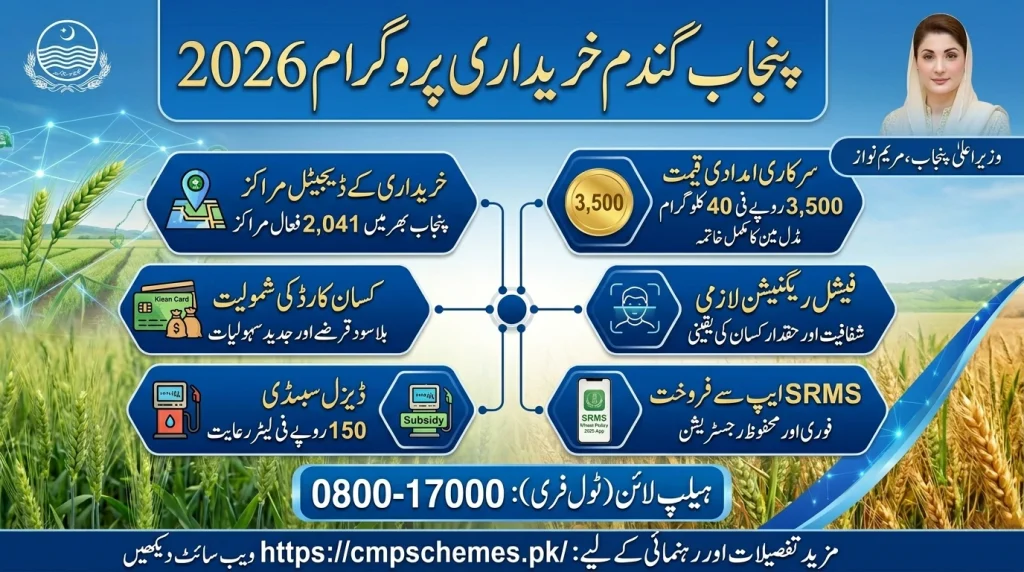
As of April 12, 2026, over 2,041 procurement centers are active across Punjab, providing farmers with a direct, digitalized channel to sell their yield at a fixed benchmark price. This guide provides an exhaustive breakdown of the registration process, support prices, and technical guidelines for the 2026 season.
Punjab Wheat Procurement Program 2026: Official Overview
The 2026 policy marks a departure from traditional “direct buying” by the government. Instead, Punjab has implemented a Public-Private Partnership (PPP) model where registered private sector aggregators handle the purchase, financing, and storage of 3 million metric tonnes (MMT) of strategic reserves. This Punjab wheat procurement scheme 2026 ensures that the wheat procurement program Punjab operates with maximum efficiency without creating fiscal liabilities for the taxpayer.
2026 Wheat Scheme Summary Table
| Feature | Details (2026 Operational Phase) |
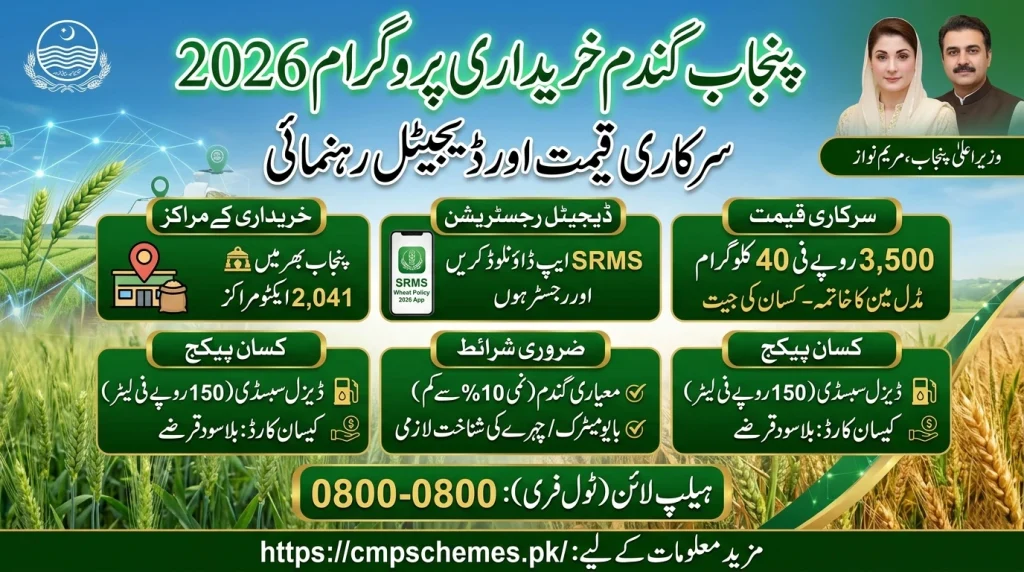
| Benchmark Support Price | Rs. 3,500 per 40kg (Maund) |
| Total Reserve Target | 3.0 Million Metric Tonnes (MMT) |
| Supervising Authority | Punjab Agriculture Department / Food Dept / PITB |
| Registration System | SRMS Wheat Policy 2026 App |
| Direct Subsidy Support | Diesel Subsidy (Rs. 150/Litre) for wheat growers |
| Helpline Number | 0800-17000 (Toll-Free) |
| Operational Hours | 8:00 AM – 8:00 PM (Daily) |
Technical Updates: The 2026 “Aggregator” Model
The Private Sector-Led Model
A unique aspect of the 2026 Wheat Policy is that the government retains strategic control and ownership of the wheat, while the private sector manages the operations. Private aggregators are pre-qualified based on their storage capacity and financial stability. This ensures that the grain is stored in modern warehouses, reducing the traditional 5–10% storage loss experienced in government silos.
The “Aggregator Limit” Rule
In 2026, no single private aggregator is allowed to handle less than 0.5% or more than 20% of the total 3 MMT target. If you are a large-scale grower (e.g., in Multan or Bahawalpur) looking for a reliable buyer, check the SRMS App’s “Verified Aggregator List.” Choosing an aggregator with a larger quota ensures they have the logistical capacity and bank financing (supported by the 70% government credit guarantee) to handle bulk purchases without delays.
The “Zero-Budget” Fiscal Model
In 2026, Punjab has officially ceased all direct government spending on wheat procurement to meet IMF-aligned fiscal requirements. The uniqueness of this year’s program lies in its “Off-Balance Sheet” nature—private aggregators now bear 100% of the procurement, financing, and risk costs. The government only provides a “Credit Guarantee” (capped at KIBOR + 1%) to facilitate bank financing for these aggregators.
Direct Digital Payments
Under the Maryam Nawaz wheat program, payments are no longer processed through manual checks. Money is transferred via crossed cheques or verifiable online banking transactions within 72 hours of procurement. This “Paper Trail” is mandatory to prevent unauthorized “deductions” by commission agents.
How to Sell Wheat in Punjab Procurement Program 2026
The wheat selling program Pakistan 2026 has been simplified through the use of technology. Farmers are encouraged to follow this step-by-step digitalized workflow to ensure a smooth transaction.
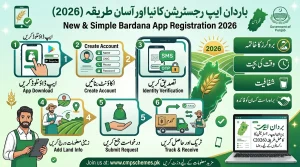
Step 1: Digital Registration (SRMS App)
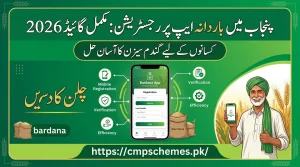
Download the SRMS Wheat Policy 2026 app from the Google Play Store. This app, developed by the Punjab Information Technology Board (PITB), allows farmers to register their land data, CNIC, and expected yield. The system is live-synced with the Punjab Land Records Authority (PLRA); the app “auto-fetches” land data to prevent urban middlemen from stealing slots meant for genuine growers.
Step 2: Finding Nearest Centers
With 2,041 wheat procurement centers Punjab established, farmers can use the app’s GPS feature to locate the closest center. Major hubs are located in:
- Multan & Bahawalpur: High-yield zones with extended storage capacity.
- Lahore & Gujranwala: High-demand zones for rapid mill supply.
- Faisalabad & Sahiwal: Centralized logistical hubs for private aggregators.
Step 3: Quality Check (FAQ Standards)
To sell wheat under the government wheat buying program, the grain must meet Fair Average Quality (FAQ) standards:
- Moisture Level: Must not exceed 10%.
- Cleanliness: Wheat must be free from dust, stones, and non-grain impurities.
- Bagging: Farmers must use the approved Bardana (gunny bags). To prevent old scandals, many centers in 2026 are trialing 50kg Polypropylene bags that are easier to track digitally.
Step 4: Bardana Issuance & Facial Recognition
Bardana (gunny bags) are issued through a digital queue. A Center In-charge can issue up to 500 bags (50kg/100kg) per grower. For larger quantities (up to 1,000 bags), approval from the District Food Controller (DFC) is required.
To eliminate “Paper Farmers,” the government has introduced Facial Recognition at all 2,041 centers. The actual landholder (or the verified tenant listed on the Kisan Card) must be physically present for the Bardana issuance. You can no longer send a “Munshi” or a representative with just your CNIC. The system requires a live biometric/facial handshake to unlock your digital queue slot.
Benefits of Wheat Procurement Program Pakistan 2026
The Punjab agriculture wheat program provides several structural benefits designed to boost the farming economy Pakistan:
- Middleman Elimination: By dealing directly with registered aggregators, farmers save an average of Rs. 300–500 per maund previously lost to “Aarhtis.”
- Price Protection: The benchmark price of Rs. 3,500 acts as a safety net aligned with import-parity pricing.
- Food Security: Strategic reserves are released in a calibrated manner (Sept–March) to stabilize flour prices during peak consumption months like Ramadan.
- Digital Transparency: Every bag of wheat is traceable through the SRMS app, reducing corruption risks.
Farmer Support: The “Kisan Card” & Diesel Subsidy
As of April 5, 2026, Chief Minister Maryam Nawaz announced a major relief package linked to the procurement cycle:
- Diesel Subsidy: Growers owning up to 25 acres of land are eligible for a subsidy of Rs. 150 per litre on up to 10 litres of diesel per acre. This is aimed at reducing harvesting and transport costs.
- Kisan Card Linkage: Registered farmers can access Interest-Free Loans (up to Rs. 150,000) for seeds and fertilizers. Farmers selling to official centers are prioritized for future solarization and tractor schemes.
- Helpline 1000: For diesel subsidy registration or reporting issues, farmers can call 1000 or use the “Maryam Ko Batayn” mobile application.
Punjab Wheat Procurement Helpline and Support
For real-time assistance, the Punjab Agriculture Department has activated a dedicated toll-free helpline. Farmers can call 0800-17000 for:
- Reporting centers that refuse to accept wheat.
- Complaints regarding delays in Bardana issuance.
- Technical help with the SRMS Wheat Policy 2026 app.
- Verification of the current daily procurement quota in their district.
Conclusion: Strengthening the Agricultural Economy
The Punjab Wheat Procurement Program 2026 is more than a buying scheme; it is a comprehensive reform aimed at making farming a profitable venture again. By utilizing the PPP model, the government of Punjab has ensured that market stability and farmer support go hand-in-hand. Farmers are advised to dry their wheat properly and use the digital portal to secure their slot early in the procurement window to avoid logistical bottlenecks.
Frequently Asked Questions
What is the official wheat support price in Punjab for 2026?
The Punjab government has set a benchmark price of Rs. 3,500 per 40kg (maund) for the 2026 procurement season.
How do I register for the Maryam Nawaz wheat program?
Registration is done via the SRMS Wheat Policy 2026 App available on the Google Play Store. You will need your CNIC and land ownership/tenancy details.
Can I sell my wheat to the government without a middleman?
Yes. The 2026 policy specifically prioritizes direct wheat selling without middleman Punjab, eliminating the need for “Aarhtis” or commission agents.
What should I do if my moisture level is above 10%?
It is recommended to dry the wheat in open sunlight for 48–72 hours before bringing it to the procurement center to meet FAQ standards.
Is there any limit on the number of bags I can get?
A Center In-charge can issue up to 500 bags per grower. For higher amounts (up to 1,000 bags), you must seek approval from the District Food Controller (DFC).
How do I apply for the diesel subsidy for wheat growers?
Eligible farmers (up to 25 acres) can apply via the Helpline 1000, the “Maryam Ko Batayn” app, or the official web portal. Verification is cross-referenced with your wheat selling record.
