

Electricity load shedding in Pakistan 2026 remains a major concern for households, businesses, and industries. While the country has significantly improved its power generation capacity over the years, outages have not completely disappeared. Instead, the nature of load shedding has evolved—from severe power shortages to more controlled and scheduled outages and read this blog for Free IT Courses with International Certificates.
In this detailed guide, you’ll find everything you need to know: latest updates, reasons behind load shedding, schedules, how to check outages in your area, and what the future holds.
What is the Current Situation of Load Shedding in 2026?
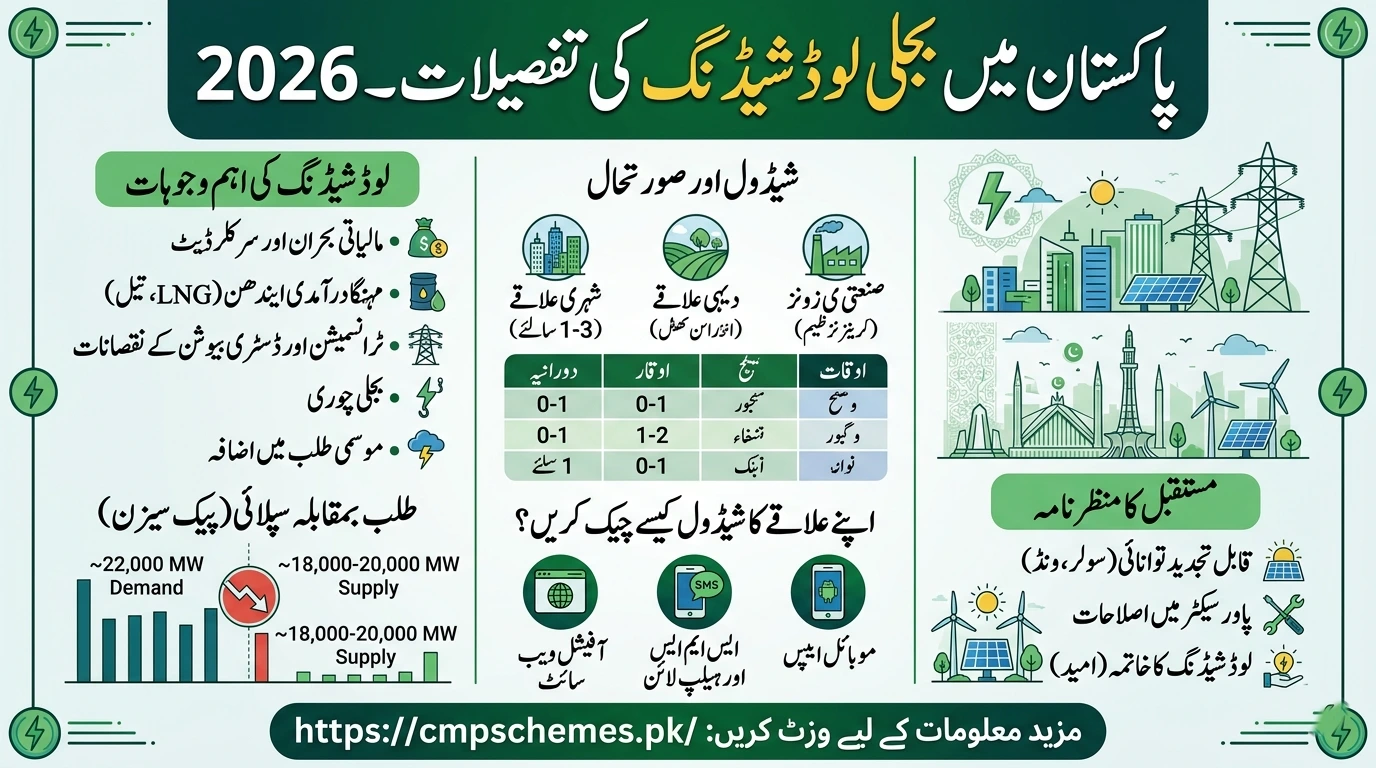
In 2026, Pakistan is not facing the same extreme electricity crisis seen in previous decades. However, short-duration power outages are still common, especially during peak demand hours.
Most areas experience:
- 1–3 hours of daily load shedding
- Higher outages during summer evenings
- Minimal or no load shedding in low-loss urban zones
These outages are planned and scheduled, rather than sudden blackouts, which is a key improvement.
In simple terms: Pakistan now has Electricity Load Shedding in Pakistan 2026 but not always the ability to deliver it efficiently and affordably.

Does Pakistan Still Have Electricity Shortage?
Interestingly, Pakistan does not suffer from a major generation shortage anymore.
Key Facts:
- Installed capacity exceeds 46,000 MW
- Peak demand averages around 18,000–25,000 MW
- Shortfall occurs due to management and cost issues—not production
So why load shedding?
Because electricity supply depends on more than just generation.

Main Reasons Behind Load Shedding in Pakistan 2026
Let’s break it down clearly.
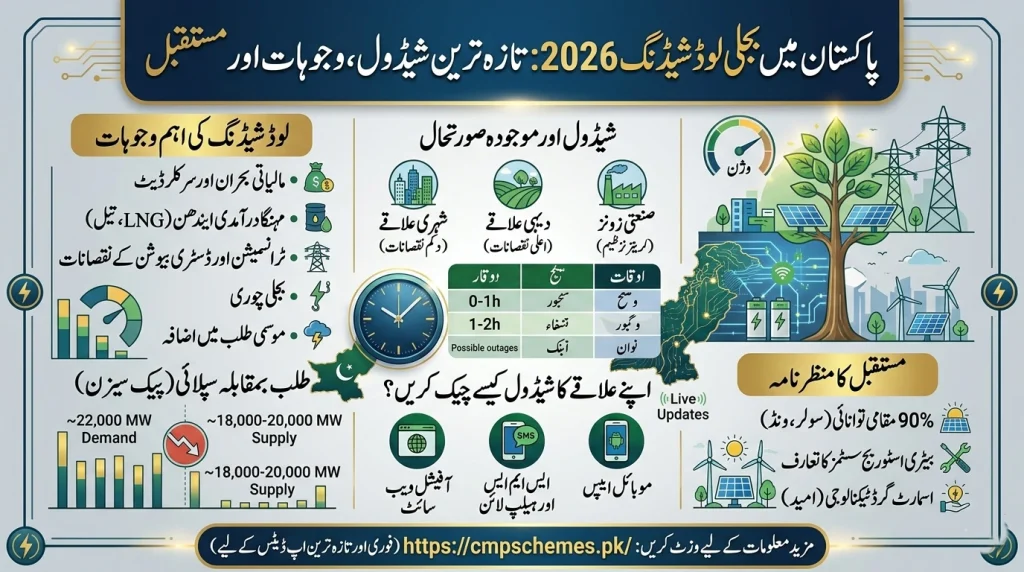
1. Financial Crisis in Power Sector
Pakistan’s energy sector is heavily affected by circular debt, which limits the government’s ability to:
- Purchase fuel
- Pay power producers
- Maintain infrastructure
2. Expensive Imported Fuel
A large portion of electricity is generated using:
- LNG (Liquefied Natural Gas)
- Furnace oil
When global fuel prices rise, the government reduces usage to avoid increasing electricity bills resulting in load shedding.
3. Transmission and Distribution Losses
Electricity is often lost before reaching consumers due to:
- Outdated grid systems
- Poor transmission lines
- Technical inefficiencies
4. Electricity Theft
Some areas experience longer outages due to illegal connections and unpaid bills.
This leads to a system called:
Loss-based load shedding
Where high-loss areas face more power cuts.
5. Seasonal Demand Spikes
During summer:
- Air conditioners increase electricity demand
- Hydropower decreases due to water shortages
Result? More load shedding during evenings.

Latest Load Shedding Updates (2026)
As of now, the situation is relatively stable but not perfect.
Current Pattern:
- Morning: 1 hour (in some areas)
- Afternoon: 0–1 hour
- Evening (Peak): 1–2 hours
- Night: Possible outages in high-loss areas
Important Notes:
- Urban areas face fewer outages
- Rural regions may experience longer durations
- Industrial zones are often prioritized

Load Shedding Schedule in Pakistan
Load shedding schedules are not the same everywhere. They depend on your electricity provider (DISCO).
Major Electricity Distribution Companies:
- LESCO – Lahore
- IESCO – Islamabad & Rawalpindi
- FESCO – Faisalabad
- GEPCO – Gujranwala
- MEPCO – Multan
- HESCO – Hyderabad
- K-Electric – Karachi
Typical Daily Schedule (Example)
| Time | Load Shedding Duration |
| Morning | 0–1 hour |
| Afternoon | 0–1 hour |
| Evening | 1–2 hours |
| Night | 0–1 hour |
Note: This is a general pattern—actual timings vary by feeder.
How to Check Load Shedding Schedule in Your Area
If you want accurate, real-time information, use these methods:
1. Official Website
Visit your DISCO’s website and check feeder-wise schedules.
2. SMS & Helpline
- Dial helpline numbers (e.g., 118)
- Send your reference number via SMS
3. Mobile Applications
Many companies now offer apps where you can:
- Check outages
- Pay bills
- Track complaints
4. Social Media Updates
Electric companies regularly post updates on:
- WhatsApp groups
5. Local Community Sources
Sometimes schedules are shared via:
- Mosques
- Notice boards
- Local WhatsApp groups
Why Some Areas Have More Load Shedding
Not all areas are treated equally.
Here’s why:
- High bill recovery = Less load shedding
- Electricity theft = More outages
- Technical losses = Longer power cuts
In extreme cases:
- Some areas face 6–10 hours
- Others face zero load shedding
This system is designed to encourage bill payment and reduce theft.
Demand vs Supply in 2026
Let’s simplify the situation:
Electricity Demand vs Supply
- Total Demand: ~22,000 MW (peak season)
- Available Supply: ~18,000–20,000 MW
- Shortfall: Up to 4,000 MW
Even though installed capacity is higher, not all plants run due to cost issues.
Government Measures to Reduce Load Shedding
The government is actively working to improve the situation.
Key Initiatives:
1. Shift Toward Renewable Energy
- Solar projects
- Wind energy farms
- Hydropower expansion
2. Energy Conservation Policies
- Reduced office hours
- Awareness campaigns
- Efficient appliance usage
3. Anti-Theft Operations
Strict action is being taken against:
- Illegal connections
- Non-payment
4. Power Sector Reforms
Efforts include:
- Reducing circular debt
- Improving billing systems
- Upgrading grid infrastructure
Future of Electricity in Pakistan
The future looks cautiously optimistic.
Expected Developments:
- 90% local energy generation by 2034
- Rapid growth in solar panel adoption
- Introduction of battery storage systems
- Smart grid technology implementation
Long-Term Vision:
Pakistan aims to:
- Eliminate load shedding
- Reduce dependence on imported fuel
- Provide uninterrupted electricity nationwide
Advantages of Controlled Load Shedding
While outages are inconvenient, scheduled load shedding has some benefits:
- Prevents total system collapse
- Reduces fuel costs
- Helps manage peak demand
- Avoids sudden nationwide blackouts
Challenges Still Remaining
Despite improvements, several issues persist:
- High electricity tariffs
- Weak infrastructure
- Financial instability
- Dependence on imports
Frequently Asked Questions
How many hours of load shedding in Pakistan today?
Most areas face 1–3 hours daily, mainly during peak evening hours.
Will load shedding increase in summer 2026?
Yes, due to higher electricity demand, outages may increase slightly.
Why is there load shedding despite enough electricity?
Because of financial issues, fuel costs, and system inefficiencies, not lack of generation.
Which areas have the least load shedding?
- Karachi (some parts)
- Islamabad sectors
- Low-loss urban areas
Can load shedding end completely?
Yes, but only if:
- Circular debt is controlled
- Renewable energy expands
- Infrastructure improves
Conclusion: Electricity Load Shedding in Pakistan 2026
Electricity load shedding in Pakistan 2026 is no longer just about shortage—it’s a complex mix of economics, infrastructure, and energy management. The country has made real progress by increasing generation capacity and introducing scheduled outages instead of long blackouts.
However, challenges like circular debt, fuel dependency, and system losses still prevent a fully stable power supply.
The good news?
With ongoing reforms, renewable energy expansion, and better policies, Pakistan is steadily moving toward a future where load shedding becomes minimal—or possibly eliminated altogether.
