

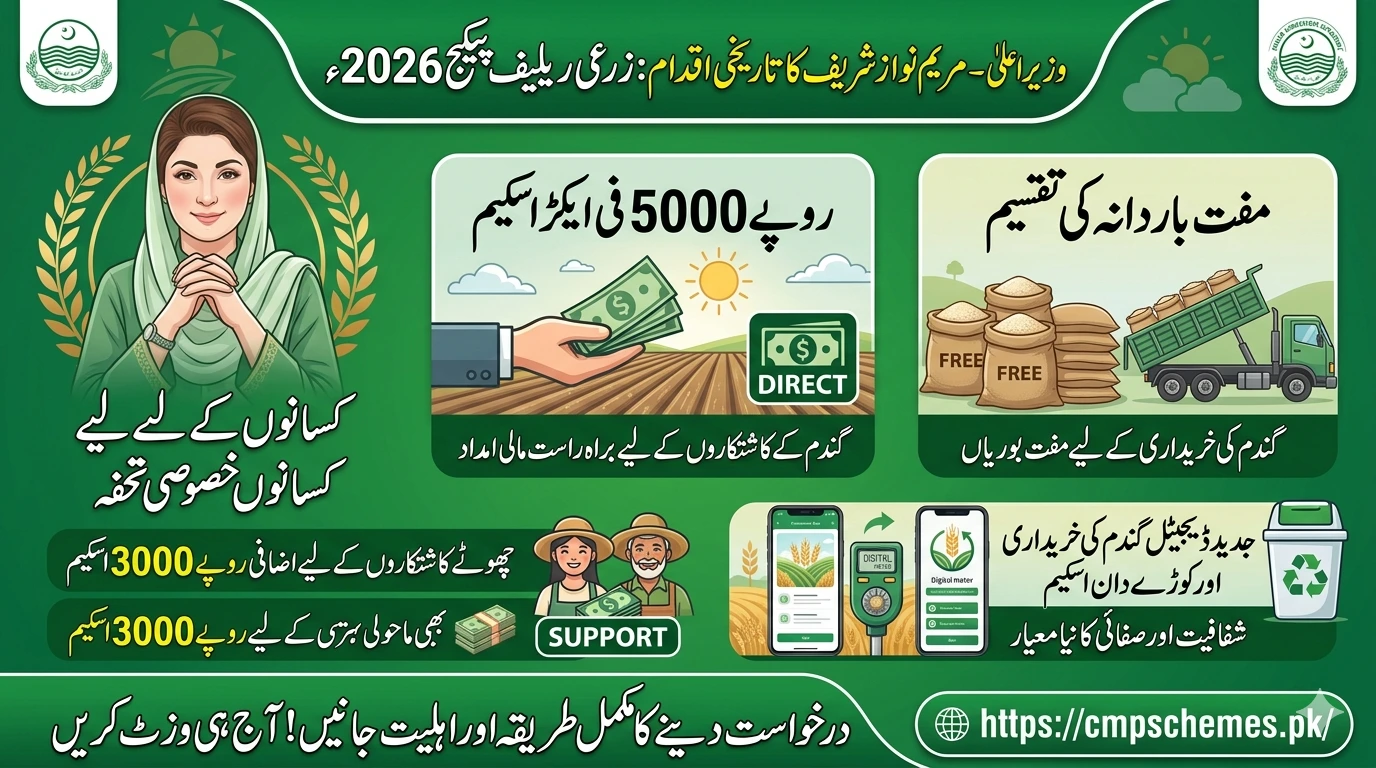
The news that cm maryam announces rs 6 billion relief package for farmers has brought much-needed hope for the agricultural community across Punjab. At a time when farmers are facing rising costs of seeds, fertilizers, and labor, this relief package is designed to ease financial pressure and improve the overall wheat procurement system.
Also Read this blog for get information about : CM Punjab Free Cancer Treatment Program 2026
This initiative is not just about financial support—it’s a broader effort to modernize agriculture, ensure transparency, and provide farmers with direct access to government assistance. From free bardana distribution to per-acre financial aid, the package covers multiple areas that directly impact farmers’ livelihoods.
What is Included in the Rs 6 Billion Relief Package?
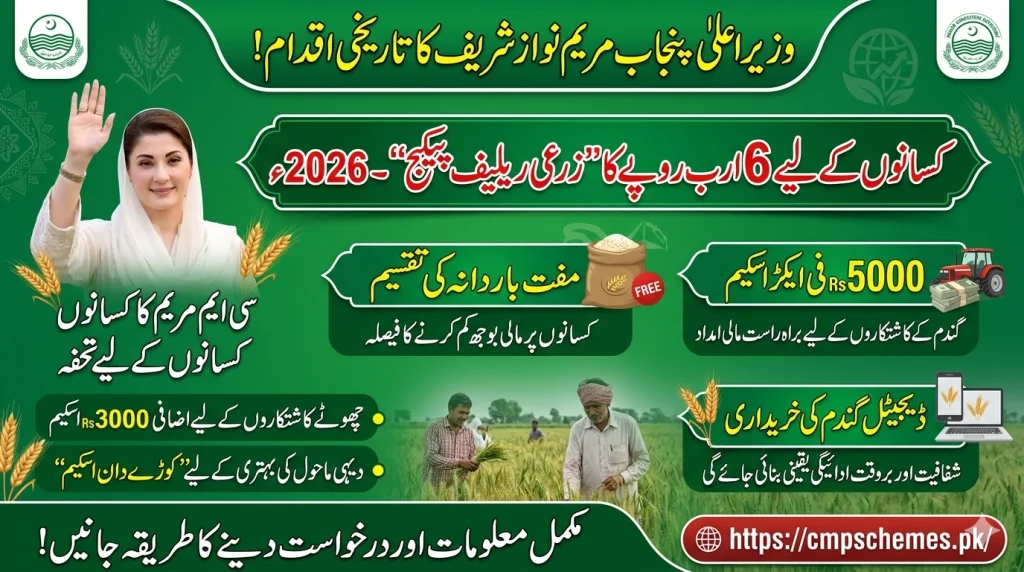
When cm maryam announces rs 6 billion relief package for farmers, it includes several key programs aimed at supporting both small and large farmers. The focus is on reducing costs, improving access to resources, and ensuring fair distribution systems.
At its core, the package combines financial assistance with practical support. Farmers can benefit from free wheat bags (bardana), direct cash schemes, and subsidies that help them manage their farming expenses more effectively.
To give you a clearer picture, here’s a quick summary:
| Feature | Details |
| Total Package | Rs 6 Billion |
| Main Focus | Wheat farmers in Punjab |
| Key Support | Free bardana + financial aid |
| Target Group | Small & medium farmers |
| Goal | Reduce costs and improve transparency |
This structured approach ensures that the relief reaches those who need it the most.

Rs 5000 Per Acre Scheme – Direct Financial Support
One of the most impactful parts of the announcement is the Rs 5000 per acre scheme. Under this program, farmers receive direct financial assistance based on the amount of land they cultivate for wheat.
Instead of complicated procedures, the aim is to provide quick relief that farmers can actually use during the growing season. This money can help cover essential costs such as seeds, fertilizers, and labor.
For small farmers, this support can make a significant difference. It reduces their reliance on loans and allows them to invest more confidently in their crops. The scheme also encourages better productivity by ensuring farmers have the resources they need at the right time.
Rs 3000 Scheme – Additional Support for Small Farmers
Alongside the main per-acre support, the government has also introduced the Rs 3000 scheme. This program is specifically designed to help small-scale farmers who often struggle the most during the farming season.
While the Rs 5000 scheme targets broader support, the Rs 3000 initiative focuses on easing immediate financial stress. It helps farmers manage day-to-day agricultural expenses and ensures they don’t fall behind due to limited resources.
Together, both schemes create a safety net that supports farmers at different levels, making the relief package more inclusive and practical.
Free Bardana Distribution – A Major Relief Step
A key highlight of the announcement is the free bardana distribution. Previously, many farmers had to purchase wheat bags or rely on agents, which added extra costs and complications.
Now, with cm maryam announces rs 6 billion relief package for farmers, the government is ensuring that bardana is provided free of cost. This not only reduces financial burden but also simplifies the wheat selling process.
Farmers can now focus on harvesting and selling their crops without worrying about additional expenses or delays. It also promotes fairness, as distribution is handled through a more transparent system.
Digital Wheat Procurement System
Another important improvement is the shift toward a digital procurement system. This means farmers can register, apply, and track their applications online—reducing the need for manual processes.
The introduction of digital platforms helps:
- Improve transparency
- Ensure timely payments
- Reduce corruption and middlemen involvement
For farmers, this is a major step forward. It gives them more control and clarity over their applications, which was often missing in traditional systems.
Dustbin Scheme – Improving Rural Environment
While most of the relief package focuses on financial and agricultural support, the dustbin scheme addresses environmental concerns in rural areas.
This initiative provides waste management solutions in villages, helping maintain cleanliness and improve living conditions. Although it may not seem directly related to farming, a cleaner environment contributes to healthier communities and better farming practices.
It also reflects a broader vision of rural development, where agriculture and living standards improve together.
Who is Eligible for These Schemes?
The government has kept the eligibility criteria simple so that more farmers can benefit from the package.
To qualify, farmers generally need to:
- Be residents of Punjab
- Own or cultivate agricultural land
- Have a valid CNIC
- Be registered with relevant agriculture authorities
Special priority is given to small and medium farmers, as they are often the most affected by rising costs and market challenges.
How Farmers Can Apply
With cm maryam announces rs 6 billion relief package for farmers, the application process is being made easier through both digital and physical channels.
Farmers can apply through online portals, agriculture department offices, or local facilitation centers. The required documents are straightforward—mainly CNIC, land details, and a registered mobile number.
The government is also encouraging digital registration to speed up the process and ensure transparency. This shift toward online systems is expected to reduce delays and make the process more efficient.
Expected Impact on Agriculture in Punjab
This relief package is expected to bring positive changes across Punjab’s agricultural sector. By reducing financial pressure and improving access to resources, farmers can focus more on productivity and crop quality.
Some expected outcomes include better wheat production, improved income stability, and a stronger rural economy. When farmers are supported effectively, it also contributes to overall food security in the country.
The announcement that cm maryam announces rs 6 billion relief package for farmers is not just short-term relief—it’s part of a larger effort to strengthen agriculture in the long run.
Challenges to Keep in Mind
While the package is promising, its success depends on proper implementation. Ensuring that funds and resources reach the right farmers on time is crucial.
There is also a need to spread awareness so that farmers fully understand how to apply and benefit from these schemes. Without proper guidance, many may miss out on the opportunities available.
The government is working on improving monitoring systems to address these challenges and ensure fair distribution.
Future Plans for Farmers in Punjab
This relief package is just one step in a broader strategy to modernize agriculture. The Punjab government is planning additional initiatives, including digital farming platforms, crop insurance programs, and support for modern equipment.
These efforts aim to create a more sustainable and resilient agricultural system. By combining financial support with technological advancements, the future of farming in Punjab looks more promising.
Conclusion
The announcement that cm maryam announces rs 6 billion relief package for farmers marks a significant step toward supporting the agricultural community in Punjab. With financial aid, free bardana, and improved systems, the government is addressing key challenges faced by farmers.
For those involved in farming, this is an important opportunity to benefit from government support and improve productivity. The key is to stay informed, complete the application process on time, and make full use of the available schemes.
Frequently Asked Questions
What is the Rs 5000 per acre scheme?
It provides direct financial assistance to wheat farmers based on their cultivated land.
What is included in the Rs 3000 scheme?
It offers additional support to small farmers for managing agricultural expenses.
What is the bardana scheme?
Farmers receive free wheat bags to simplify the procurement process.
Who can apply for these schemes?
Farmers in Punjab with valid CNIC and land details are eligible, especially small landholders.
How can farmers apply?
They can apply through online portals, agriculture offices, or facilitation centers.
