

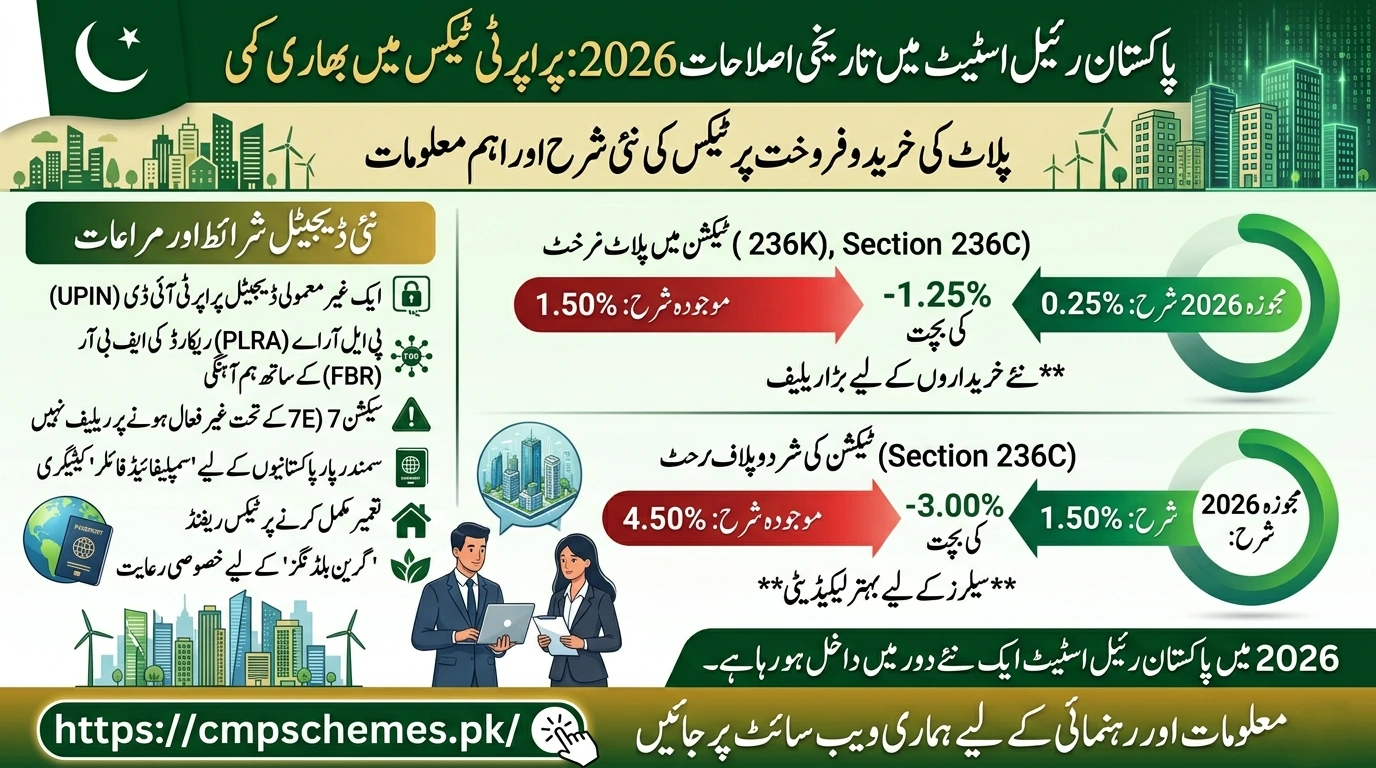
The Pakistan real estate market is entering a transformative phase with the proposed property tax reduction 2026. Aimed at revitalizing the housing sector and providing much-needed tax relief, the federal government is considering a significant overhaul of the existing tax framework. These reforms, specifically targeting tax 236C and 236K Pakistan, are designed to encourage a “filer culture” while making property ownership more accessible for the average citizen.
As of April 2026, the proposed changes represent a strategic shift toward a more documented and transparent real estate market Pakistan 2026, positioning the industry for high-ROI investment opportunities.
Understanding the Proposed Property Tax Pakistan 2026
The core of the real estate tax reduction Pakistan lies in the drastic lowering of withholding taxes on both the purchase and sale of immovable property. These measures are intended to lower the entry barrier for middle-class investors and boost the overall housing sector Pakistan growth & also read this article for get Akhuwat Loan.
Key Proposed Tax Slabs for 2026
| Transaction Type | Current Tax Rate | Proposed 2026 Rate | Net Reduction |
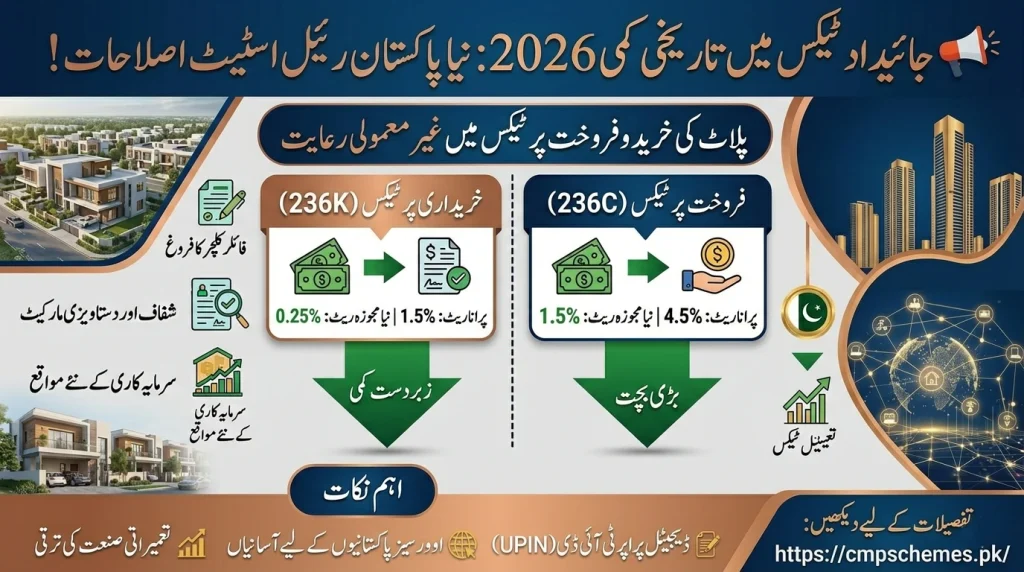
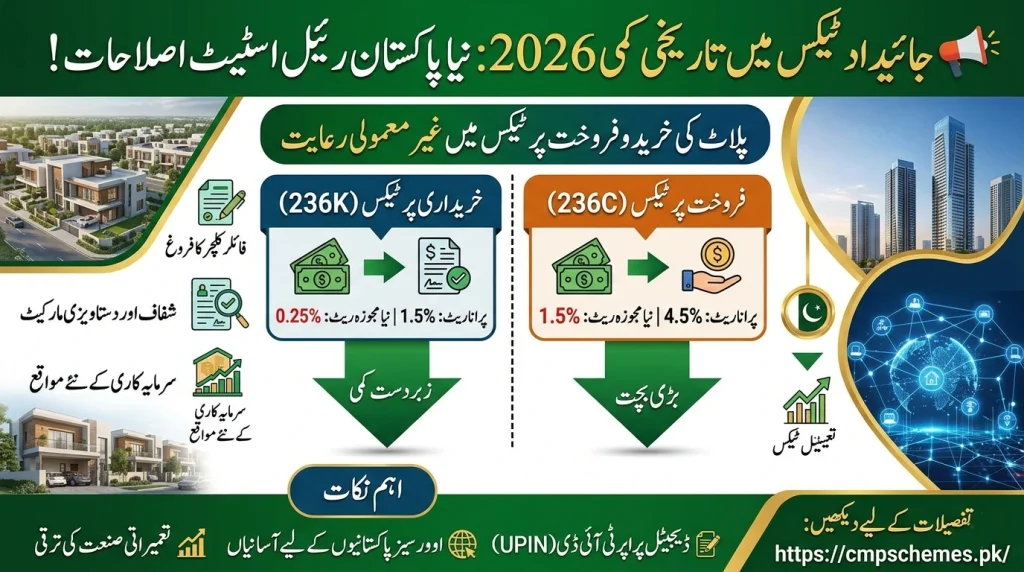
| Plot Selling (Section 236C) | 4.5% | 1.5% | -3.0% |
| Plot Buying (Section 236K) | 1.5% | 0.25% | -1.25% |
These property tax reduction 2026 plot purchase tax reduction measures are expected to be officially implemented in the upcoming fiscal budget, providing a massive incentive for new market entries.
Real Estate Tax Reduction Pakistan Digital Protocols
The “Digital Property ID” Integration
In 2026, the FBR is moving toward a Unique Property Identification Number (UPIN) for all transactions. The proposed tax reduction is strictly linked to digital documentation. If a property does not have a UPIN linked to the owner’s biometrics, the transaction will not qualify for the lower 0.25% rate and will instead be taxed at the old “Un-Documented” slabs.
The “Digital Fard” Sync (PLRA Warning)
The Punjab Land Record Authority (PLRA) and FBR are now in a “Real-Time Sync” for the 2026 cycle. You must ensure your CNIC is linked to your property record at the Arazi Record Center (ARC) before June 30. If the PLRA data does not match your FBR Filer profile, the automated UPIN system will default to the “Non-Filer” rate of 10%+, regardless of your actual tax filing status.
The “Rental Income” Cross-Check (Section 7E)
While the buying and selling tax is dropping, the FBR system now performs an automated check for Section 7E (Deemed Income) compliance before issuing a UPIN transfer. If you have outstanding deemed income taxes on other properties, the 0.25% “Relief” rate may be withheld until your total tax profile is cleared. This cross-check ensures that the 2026 relief is enjoyed by law-abiding taxpayers.
The “Overseas Filer” Strategy
Overseas Pakistanis often struggle with filer status due to a lack of local income. The 2026 reforms include a “Simplified Filer” category for this demographic. By declaring their remittances through official banking channels, Overseas Pakistanis can now claim “Active” status for real estate transactions without filing complex local income returns, securing the 0.25% buying rate instantly.

Analyzing Tax 236C and 236K Pakistan Market Impact
The new property tax rates 236C and 236K Pakistan target the two most significant transaction costs in real estate.
Tax 236K: Plot Buying Tax Relief
By reducing the buying tax to 0.25%, the government is essentially removing the “upfront friction” that discourages long-term investment. This property market boost Pakistan ensures that capital is not tied up in taxes before a project even breaks ground.
Tax 236C: Plot Selling Tax Decrease
For sellers, the drop from 4.5% to 1.5% allows for better liquidity. This change is vital for the construction industry growth Pakistan, as it enables developers and individual sellers to cycle their capital back into new projects more efficiently.
The “Holding Period” Trap
While the withholding tax is dropping, the Section 236C (Selling) waiver is tied to the holding period. As of April 2026, the 1.5% selling tax only applies if the property was held for more than 1 year. If you attempt to flip a plot within 6 months, the government may apply a “Speculation Surcharge” of an additional 2%, effectively nullifying the reduction for short-term flippers.

Property Investment Pakistan Benefits for Buyers and Sellers
The impact of tax reduction on housing sector Pakistan extends beyond simple numbers. It reshapes the “Filer vs. Non-Filer” dynamic and enhances real estate investment opportunities.
- The “Construction Completion” Credit: The government is considering a withholding tax refund for buyers who complete construction within 18 months. Keep your completion certificate from the relevant authority (DHA/LDA); you may be eligible to claim a refund of your initial 236K tax as an “Early Builder” incentive, effectively bringing your net tax to 0%.
- The “Green Building” Bonus: There is a proposed additional 0.1% rebate on property tax for developers and buyers of certified green buildings. If you are investing in high-rise projects in Lahore or Multan, check for RERA-certified “Green” status. These properties are expected to receive a further reduction in annual municipal property taxes, adding another 1-2% to your annual net yield.
- For Sellers: Lower plot selling tax Pakistan rates mean higher net profits and faster transaction closures.
- For Overseas Pakistanis: The property investment Pakistan landscape becomes significantly more attractive as transaction costs align with international standards.

Strategic Real Estate Market Pakistan 2026 Roadmap
Part of the broader property tax reduction 2026 “Property Market Recovery 2026” roadmap includes the introduction of the Real Estate Regulatory Authority (RERA) and standardized markup subsidies.
The Role of RERA and Documentation
The government is pushing for a formal, Western-style mortgage system. By reducing the property tax reduction 2026 Pakistan, the FBR hopes to minimize under-reporting of property values. When taxes are lower, buyers and sellers are more likely to declare the true value of the transaction, leading to better market transparency and documentation.
High-ROI Investment Zones
With these reforms, specific areas like DHA Lahore, DHA Multan, and LDA City are expected to see a surge in activity. Experts predict a potential 20% to 25% ROI within the first few months of these tax cuts taking effect.
Conclusion: A New Era for Pakistan Real Estate
The property tax reduction 2026 Pakistan details signal a historic turnaround for the industry. By slashing plot buying tax and plot selling tax, the government is providing a solid foundation for sustainable growth. For savvy investors, the property market Pakistan 2026 represents a prime window for high-return investments before the market fully adjusts to these aggressive incentives.
Frequently Asked Questions
Is the property tax reduction 2026 already in effect?
As of April 2026, these are proposed reforms under active consultation. The official implementation is expected to coincide with the next fiscal year’s budget announcement.
Will non-filers also benefit from the tax reduction?
The government’s primary focus is on filers. Non-filers will likely continue to face significantly higher rates to encourage them to join the filer culture Pakistan property initiative.
Does this reduction apply to all types of property?
The current proposals specifically highlight residential and commercial plots. Further clarity on built-up properties and agricultural land is expected in the final notification.
How does this affect Capital Gains Tax (CGT)?
While withholding taxes (236C/K) are being reduced, CGT rules generally reward long-term holdings. Holding a property for over 6 years typically results in a 0% CGT rate, further promoting long-term stability.
Is the tax reduction higher for built-up houses compared to plots?
While the plot purchase tax reduction is the primary highlight of the 2026 reforms, the government is also considering a separate slab for constructed homes. To promote the construction industry growth Pakistan, taxes on first-time buyers of constructed houses may be reduced even further than raw plots to encourage immediate residency.
How is the tax calculated if the market value is higher than the DC rate?
Property taxes are generally calculated based on the FBR valuation table or the DC (District Collector) rate, whichever is higher. Even with the property tax reduction 2026, the percentage (e.g., 0.25% for buying) will be applied to these official values rather than the actual “on-the-ground” market price to maintain a standardized revenue system.
